Artificial Intelligence (AI) has revolutionized the world, and companies like OpenAI, Anthropic (Claude), and Perplexity are at the forefront of this transformation. However, none of these groundbreaking AI innovations originated in India.
This raises an important question: why hasn’t India, with its vast talent pool and booming tech industry, produced an AI pioneer of this scale?
The answer lies in the fundamental building blocks of AI itself—critical reasoning and the art of questioning—both of which are conspicuously absent in India’s education system.
The Role of Critical Thinking in AI Development
AI, at its core, is built on the ability to question, analyze, and infer. The foundation of AI systems like GPT or Claude is deeply tied to the art of asking meaningful questions and formulating responses based on logical reasoning.
The greatest minds in AI didn’t just accept existing knowledge; they challenged it, experimented, and reshaped it.
From Alan Turing’s foundational work on computation to modern deep learning breakthroughs, AI has always been driven by critical thinkers who push boundaries rather than conform to them.
The key ingredients behind AI’s rapid evolution are:
- Curiosity: The desire to ask better questions.
- Critical Reasoning: The ability to challenge established norms.
- Freedom to Experiment: The willingness to take intellectual risks.
Unfortunately, these very attributes are discouraged in India’s education system.
The Colonial Hangover of India’s Education System
The Indian education system is still largely structured around rote learning, a relic of the colonial past where the British designed it to produce clerks and administrators rather than thinkers and innovators. Instead of fostering curiosity, it rewards memorization. Instead of encouraging debate, it punishes questioning.
How the System Stifles Innovation
Lack of Encouragement for Questioning: Indian students are often discouraged from challenging their teachers. The classroom remains a space where knowledge is dictated, not debated.
Examination-Oriented Learning: Students are trained to score well in exams, not to think critically or solve real-world problems.
Bureaucratic and Rigid Academic Culture: Research and innovation are stifled by red tape and lack of autonomy, making it difficult for disruptive technologies to emerge.
Aversion to Risk and Failure: AI pioneers in the West embrace failure as a stepping stone. In India, failure is stigmatized, pushing students toward safe career paths like engineering and medicine rather than entrepreneurship or research.
Outdated Curriculum: While the world moves toward AI-driven interdisciplinary learning, Indian universities still emphasize outdated syllabi with little practical application.
Where India Excels but Falls Short
India undoubtedly produces some of the world’s best engineers and computer scientists. IITs and other top institutions churn out brilliant minds who often excel when given opportunities abroad.
Yet, the same individuals who fail to innovate within India go on to lead groundbreaking AI teams in companies like Google, Meta, and OpenAI.
This is because the environment outside India nurtures risk-taking, intellectual autonomy, and critical discourse—things the Indian education system actively suppresses.
The Need for an Educational Revolution
If India truly aspires to be an AI leader, it must:
- Reform its education system to prioritize critical thinking over rote learning.
- Encourage questioning and debate in classrooms from an early age.
- Foster a culture of research and risk-taking in universities and startups.
- Reduce bureaucratic hurdles in scientific research and AI development.
- Invest in AI-driven startups rather than just outsourcing talent to global tech giants.
Conclusion
India has the talent, the numbers, and the ambition. But without a fundamental shift in how it nurtures intellectual curiosity, it will continue to be a nation of AI consumers, not creators. The next OpenAI or Claude can come from India, but only when questioning is encouraged, critical thinking is prioritized, and innovation is not sacrificed at the altar of rigid educational traditions.


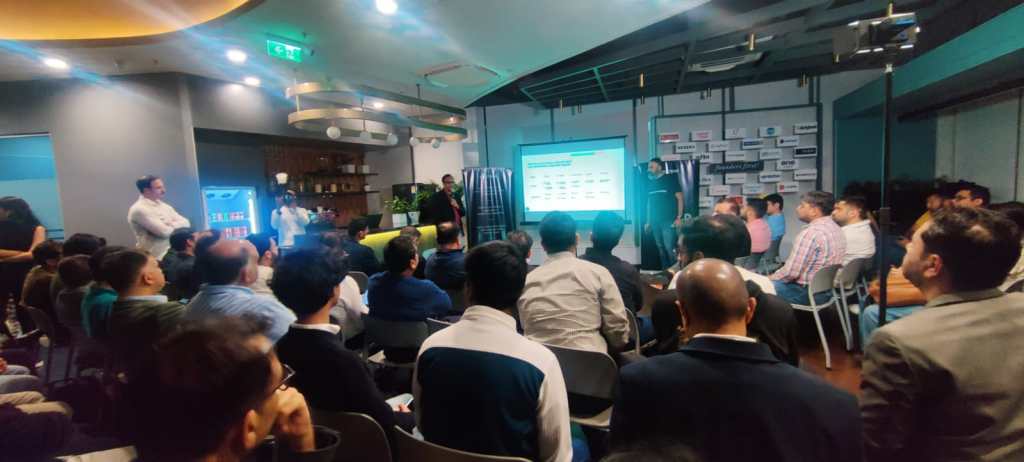
 Shunya AI